
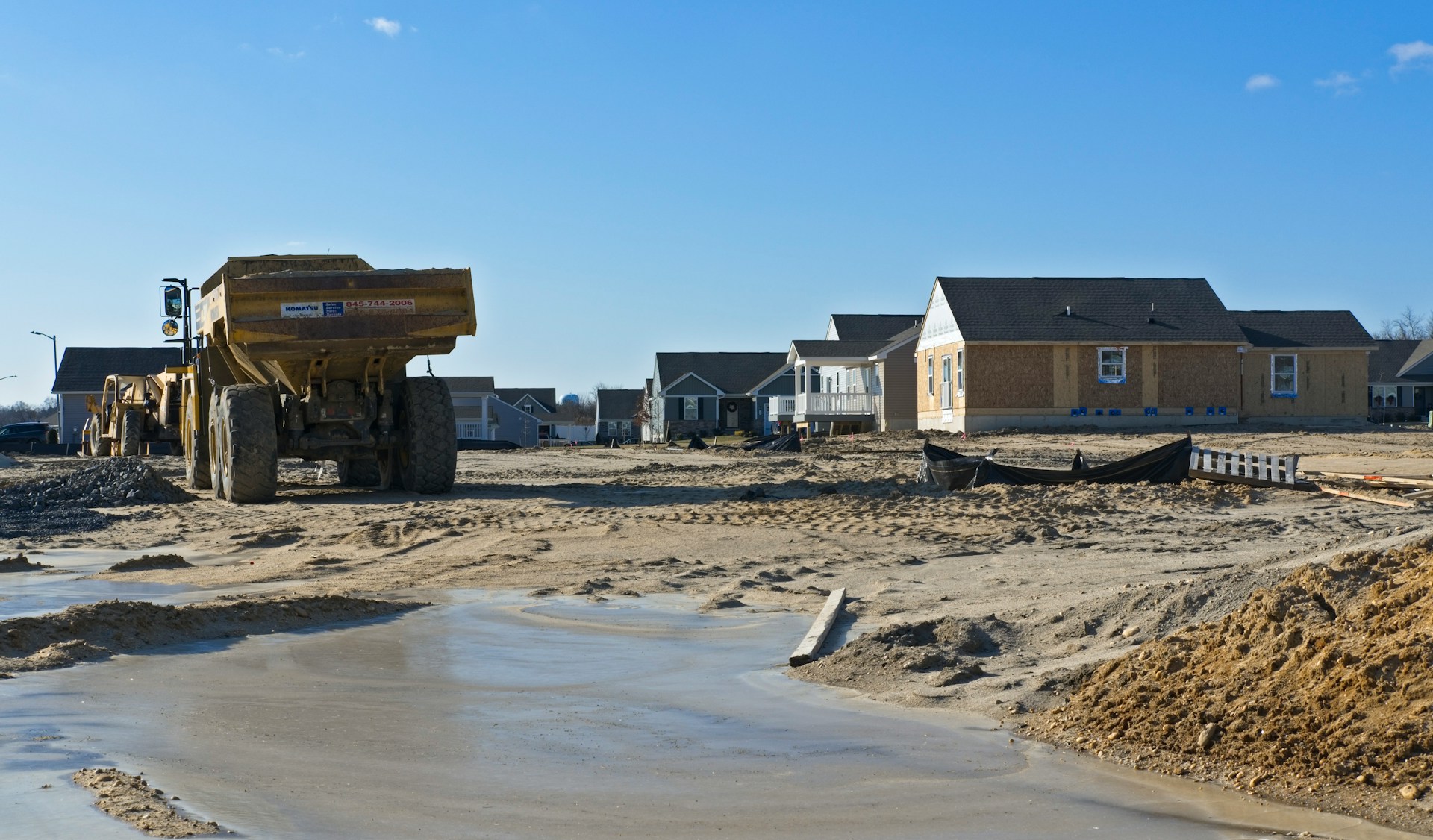
Every construction site with more than an acre of disturbed soil is one heavy rain away from a compliance problem.
Most builders know the basics: get a Stormwater Pollution Prevention Plan (SWPPP) in place, install some erosion controls, and check the box on a weekly inspection. But there’s a meaningful gap between a compliance program that technically exists and one that actually holds up when a regulator shows up unannounced. That gap is almost always closed by bringing in experienced SWPPP & NPDES inspectors who’ve seen sites fail for the same avoidable reasons, and who know exactly what to check before a regulator does.
The Regulatory Baseline
Under the Clean Water Act, any site disturbing one acre or more of land generally needs NPDES permit coverage and a site-specific SWPPP. The EPA’s SWPPP guidance for industrial sites calls for identifying pollutant sources, describing the Best Management Practices (BMPs) used to control them, and documenting ongoing compliance. Most permits require weekly inspections during active construction, a follow-up inspection within 24 hours of a qualifying rain event, and documentation (logs, photos, corrective action records, etc.) proving each inspection actually happened.
HB NEXT has covered how often these inspections need to occur in more detail, but the short version is this: the schedule isn’t a suggestion, it’s written into your permit, and skipping it doesn’t make the requirement disappear, it just makes the eventual violation worse.
Local and State Compliance Rules Carry Real Weight
It’s easy to think of NPDES compliance as one federal standard, but enforcement actually runs through several layers of government at once, and each layer can add requirements on top of the EPA baseline.
At the federal level, the Clean Water Act sets the floor. From there, most states run their own authorized version of the program, often under a different name and with their own procedures. In Georgia, that authority sits with the Georgia Environmental Protection Division (EPD), which issues its own NPDES General Permit for construction activity, requires SWPPP site inspections to be performed by a Georgia Soil and Water Conservation Commission (GSWCC) Certified Inspector, and processes Notices of Intent through its GEOS online portal — with filing fees that vary depending on whether the EPD or a local government is the Local Issuing Authority (LIA) for that project’s area.
Then there’s the county or municipal layer, where a lot of casual compliance efforts break down. Virtually all jurisdictions issue Land Disturbance Permits (LDPs) to owners or developers. Larger jurisdictions often hold their own Municipal Separate Storm Sewer System (MS4) permit, which brings local enforcement on top of whatever the contractor’s own SWPPP requires. Fulton County, Georgia is a good example of jurisdiction complexity. Each city in the county maintains different thresholds for issuing LDPs, while the county holds an MS4 Phase I permit. LIAs enforce compliance with the entirety of municipal, county, state and federal environmental regulations. A contractor who only satisfies the state EPD permit and ignores city or county-level regulations can end up cited by the LIA.
Jurisdiction-savvy Inspection Details
An experienced inspector’s value isn’t just knowing BMPs: it’s knowing which rulebook applies where. Examples of what typically varies by jurisdiction:
- Inspection frequency and rain-event thresholds — Georgia’s EPD permit requires inspections every 7 days or within 24 hours of a 0.5-inch rain event, but other states set different intervals and thresholds.
- Who’s qualified to inspect — Georgia requires SWPPP inspections to be conducted by a GSWCC Certified Inspector specifically, not just any trained staff member. HB NEXT offers training and re-certification for NPDES Levels 1A and 1B, giving stormwater compliance professionals the flexibility to complete recertification courses at their own pace.
- Permit names and filing processes — Georgia’s NPDES General Permit runs through the state EPD’s GEOS portal with its own NOI and NOT procedures and per-acre fees; other states run comparable programs under entirely different names and systems.
- County and municipal enforcement programs — jurisdictions bring their own compliance requirements and extra permits based on lot size, activity type, and inspection schedules beyond the state permit.
State and local regulators won’t accept “the EPA guide didn’t mention that” as an excuse. The inspectors who consistently keep sites clean treat federal, state, and county requirements as three overlapping filters, not one.
Where Casual Inspections Fall Short
A checklist-only approach to SWPPP inspections tends to catch the obvious problems: a torn silt fence, an overflowing sediment basin, sediment in the roadway. What it often misses is everything upstream of the obvious. Effective inspections go beyond a visual scan of BMPs — they verify that sediment basins are actually draining, that stabilization measures are holding on inactive areas, and that controls are cleaned out after major storms, not just before the next scheduled walk-through.
Casual inspectors also tend to treat the SWPPP as a static document. An updated working set of plans, including contractor redlines and field revisions, should be maintained on site and readily available for regulatory review. A pristine, unmarked set of plans can be a red flag to regulators, as it may indicate that site conditions and BMP modifications have not been documented—even if every BMP is functioning correctly.
What Experienced SWPPP & NPDES Inspectors Do Differently
The difference between a routine inspection and a genuinely protective one usually comes down to a handful of habits that don’t show up on a generic checklist:
- They walk the site with water flow in mind, not just a clipboard. Rather than confirming BMPs exist, experienced inspectors ask whether each control is actually positioned where runoff travels — accounting for construction phasing, seasonal changes, and maintenance access. A BMP that looks correct on the approved plan but sits in the wrong spot in the field offers no real protection, and regulators increasingly evaluate field conditions against the drawings, not just the paperwork.
- They inspect after the storm, not just before it. Post-storm inspections reveal what pre-storm walkthroughs can’t: displaced hay bales, blown-out silt fences, sediment that escaped a barrier before anyone noticed. Seasoned inspectors treat the 24-hour post-rain-event window as the most important inspection of the week, not an afterthought.
- They check for silent failures, not just visible damage. Standing water, slow-draining basins, and sediment building up behind a barrier often signal a system that’s about to fail. Less experienced inspectors tend to flag damage after it’s occurred; experienced ones catch the warning signs first.
- They document like a regulator will read it, because they will. Time-stamped photos, corrective action logs, and consistent formatting aren’t busywork. If it isn’t documented, regulators assume it didn’t happen, and vague or inconsistent notes are one of the most common reasons a site fails an audit even when the physical controls are sound.
- They close the loop on deficiencies instead of just noting them. Flagging a problem is only half the job. Experienced teams track corrective actions to completion and confirm the fix actually worked, rather than letting the same issue reappear on next week’s report.
- They train the crew, not just the inspector. A single qualified inspector can’t watch a site 24/7. The best programs make sure field crews understand why a silt fence matters, so problems get reported the moment they happen rather than sitting until the next scheduled walk.
- They know which regulator they’re actually answering to. A seasoned inspector doesn’t assume the federal permit is the only one that matters. They confirm the state program’s specific thresholds, check whether the municipality has its own MS4 inspection requirements or discharge ordinance, and make sure documentation is formatted the way each authority expects to see it.
- They plan for the season ahead, not just the week ahead. Summer thunderstorms bring sudden, high-intensity runoff on dry, compacted soil; spring thaw brings a different set of risks entirety. Inspectors who adjust BMP maintenance and inspection intensity for the season catch problems that a static, year-round routine misses.
Compliance is More Than Avoiding Fines
The financial exposure alone is significant — serious citations often exceed $10,000, and repeat violations can climb well past $100,000. But the cost isn’t purely monetary. A documented stormwater violation follows a company into prequalification reviews, insurance renewals, and future bid packages. It shapes how general contractors and municipalities view your operation long after the fine is paid.
Partner With Experienced SWPPP & NPDES Inspectors
Building and maintaining a defensible SWPPP program — one that holds up to regulator scrutiny, adapts as your site changes, and produces records that actually protect you — is a lot to carry on top of running a project. That’s exactly why builders partner with HB NEXT’s experienced SWPPP & NPDES inspectors.
Partnering with HB NEXT for stormwater compliance means you have an experienced inspector who supports you from regulatory filing through project closeout, with predictable costs, audit-ready digital records, and proactive risk mitigation built in from day one. Our inspectors are fluent in federal, state, and local requirements alike — so nothing falls through the cracks between what the EPA expects, what your state permit demands, and what your city ordinance requires. It’s compliance handled by people who know exactly what regulators expect to see, at every level, so you can keep your focus on the build.
Photo by Ernie Journeys on Unsplash